
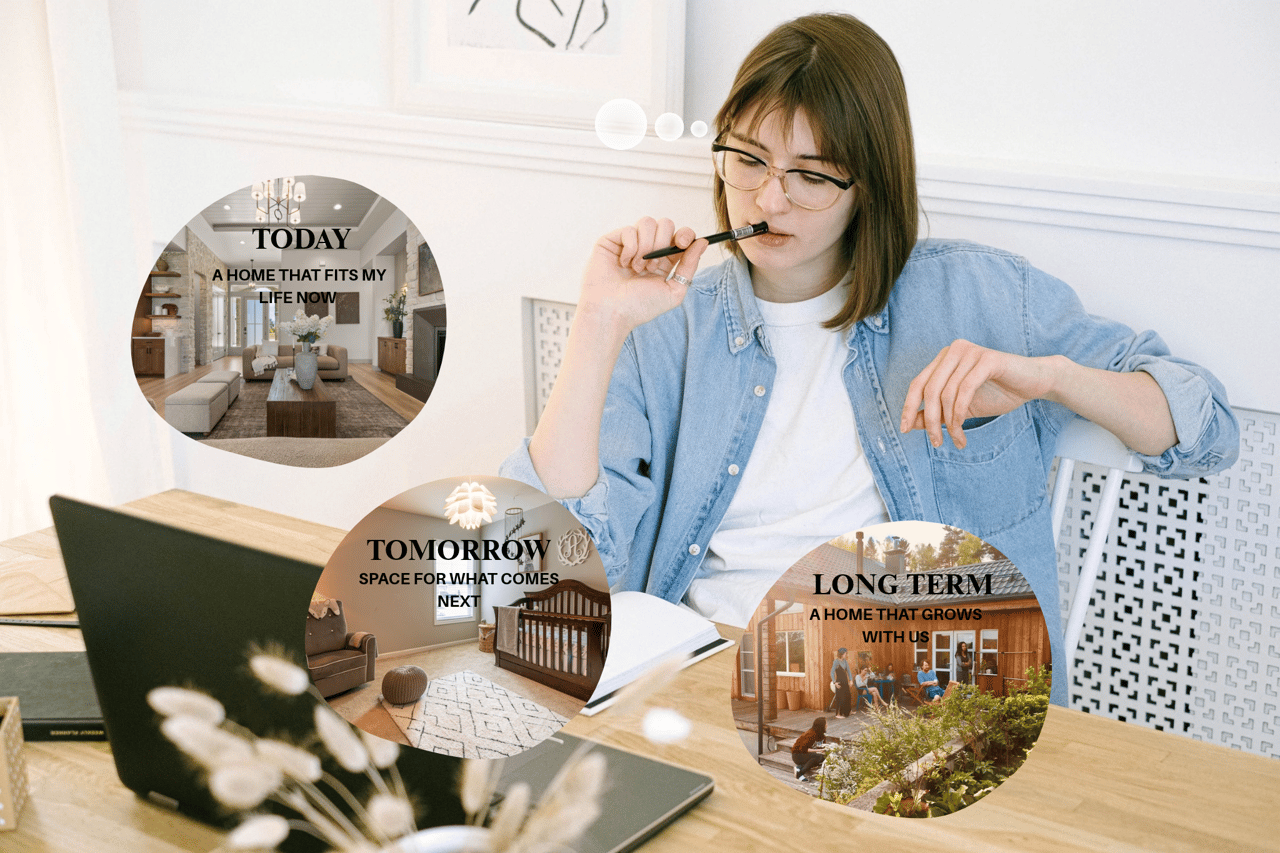
Your routines can change. Families grow. Work situations evolve. Priorities shift. The home that feels perfect today may eventually need to accommodate a home office, additional storage, different accessibility needs, or simply a new way of living.
That does not mean you need to predict exactly what your life will look like years from now. Instead, look for a home with enough flexibility to adapt as your plans evolve.
Here are some things to consider when choosing a home for today, tomorrow, and the long term.
Start With What You Need Today
Before thinking years ahead, begin with your everyday life right now.
A home should make your regular routines easier, not more complicated.
Think about how you actually spend your days.
How many bedrooms do you need? Do you work from home? How much storage do you use? Is outdoor space important? How much maintenance are you comfortable handling? How far are you willing to commute?
Your budget is also part of this conversation.
A home may offer everything on your wish list, but if the monthly costs leave little room for savings, travel, emergencies, or other priorities, it may not be the right fit.
Focus first on finding a home that comfortably supports the life you're already living.
Think About What Could Change Tomorrow
Once you've identified what works today, think about the next several years.
You don't need a perfect plan. Just consider the changes that are reasonably possible.
Maybe you expect to work from home more often. Perhaps you'll need another bedroom, space for visiting family, a larger garage, or more storage. You may want a yard now but prefer something easier to maintain later.
This is where an adaptable floor plan can make a difference.
A bonus room might become an office, playroom, guest room, or hobby space. An extra bedroom could serve several purposes over time. Flexible living areas can give you options without requiring you to move every time your needs change.
Look Beyond the Number of Bedrooms
Bedroom and bathroom counts are important, but they don't tell the whole story.
Two homes with the same square footage can function very differently.
When touring a home, pay attention to the layout and ask yourself how each space could be used.
Can a room serve more than one purpose? Is there enough storage? Does the kitchen work for your everyday routine? Is there separation between work and living spaces if you need it? Could the layout accommodate guests or family members in the future?
A thoughtful layout can sometimes be more valuable than simply having additional square footage.
Consider the Location Long Term
The home itself isn't the only thing that needs to work over time. The location does too.
When buying in the Treasure Valley, think about how the neighborhood fits both your current routine and your future plans.
Consider your commute, shopping, recreation, medical services, family and friends, and the places you visit regularly.
Also think about how much driving you're comfortable doing.
A location that works well with your everyday life can continue adding value to your experience long after the excitement of moving into a new home has passed.
Think About Maintenance and Upkeep
A larger home or yard can be appealing, but it also comes with responsibilities.
Consider how much time and money you're comfortable putting toward landscaping, cleaning, repairs, and ongoing maintenance.
New construction and resale homes can also come with different maintenance considerations. A newer home may have newer systems and materials, while an established property may already have landscaping, window treatments, fencing, and other improvements completed.
Neither option is automatically better.
The question is which one fits the amount of upkeep you're comfortable managing now and later.
Don't Forget the Neighborhood

When buyers think about their long term needs, they sometimes focus entirely on the house.
But your neighborhood is part of your home too.
Look at community amenities, parks, pathways, nearby services, traffic patterns, HOA requirements, and future development in the surrounding area.
If you're considering a planned community in Eagle, Meridian, Star, Boise, Nampa, Caldwell, or elsewhere in the Treasure Valley, think about whether its overall lifestyle fits what you're looking for.
A beautiful home in a location that doesn't work for your everyday life can become frustrating over time.
Leave Some Flexibility in Your Budget
Planning for the future also means avoiding a housing payment that stretches your budget too far.
Homeownership includes expenses beyond the mortgage. Property taxes, insurance, utilities, HOA fees, maintenance, repairs, landscaping, and unexpected expenses can all become part of the monthly or annual cost of owning a home.
Leaving some flexibility in your budget can make it easier to handle changes without your home becoming a financial burden.
The goal isn't necessarily to buy the most expensive home you qualify for.
It's to choose a home that allows you to live comfortably after you buy it.
Consider Long Term Resale Appeal
Even if you're planning to stay for many years, circumstances can change.
That's why it's worth considering how other buyers might view the property someday.
Features such as a functional floor plan, useful storage, practical bedroom configurations, a good location, and well maintained living spaces may appeal to a broader range of future buyers.
You shouldn't choose a home entirely for the next owner, but resale potential can still be one part of your decision.
Create Three Lists Before You Start Looking
One simple way to organize your home search is to divide your priorities into three categories.
TODAY
What do you need for your everyday life right now?
Think about your budget, commute, bedrooms, workspace, storage, outdoor space, and daily routines.
TOMORROW
What might change over the next few years?
Consider additional bedrooms, flexible rooms, family changes, working from home, accessibility, storage, or lifestyle changes.
LONG TERM
What could make the home continue to work well over time?
Consider maintenance, location, neighborhood development, ongoing costs, and potential resale appeal.
You may not find a home that checks every box. That's okay.
The purpose of the list is to help you recognize which features matter most and where you're comfortable compromising.
Buy for Your Life, Not Just Your Checklist
It's easy to get caught up in individual features when touring homes.
A beautiful kitchen, oversized primary suite, or impressive backyard can quickly grab your attention.
But the best home isn't necessarily the one with the longest list of upgrades.
It's the one that fits your budget, daily routine, priorities, and plans while giving you enough flexibility for life to change.
When you're looking at homes, ask yourself one simple question:
Can I see this home continuing to work for me as my life evolves?
If the answer is yes, you may be looking at more than a home that works today. You may be looking at one that can grow with you.
Thinking about buying a home in the Treasure Valley? Let's explore homes and communities that fit what you need today while keeping tomorrow in mind.