
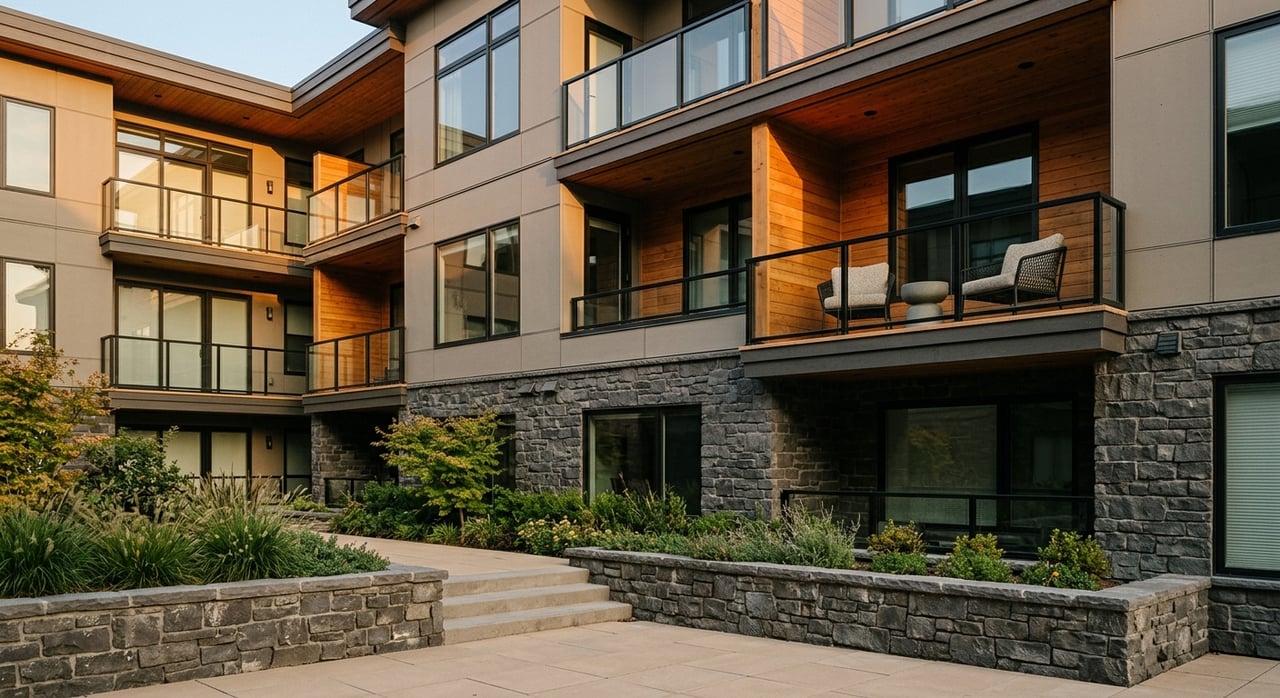
Trying to decide between a Boise condo and a suburban home in the Treasure Valley? You are not alone. Many buyers are weighing the same tradeoff: stay closer to Boise’s core with a lower-maintenance setup, or head to the suburbs for more space and more control over the property. The right choice usually comes down to your budget, commute, lifestyle, and how much upkeep you want to handle day to day. Let’s break it down.
Price differences to know
If you are comparing Boise condo living versus Treasure Valley suburbs, price is often the first filter. But the comparison is not always as simple as “condos cost less and suburbs cost more.” In this market, the numbers are close enough that your lifestyle priorities can matter just as much as your budget.
According to Zillow home value data, Boise’s typical home value was $494,696 as of February 28, 2026. Meridian’s typical home value was $526,393, while Nampa’s came in at $407,370. That means Meridian is currently pricing above Boise, while Nampa remains the lower-cost suburban option in this comparison.
For condos specifically, Redfin’s Boise condo listings showed 58 condos for sale at a median listing price of $409,000. That is noticeably below Boise’s overall typical home value. It also puts Boise condos in a price range that is surprisingly close to Nampa’s typical home value.
What that means for you: if you are comparing a Boise condo with a suburban single-family home, the decision may not be about a huge price gap. It may be more about whether you want central access and less exterior upkeep, or more square footage, yard space, and a different daily routine.
Condo ownership costs
A condo can offer a lower entry point into Boise, but your monthly cost picture will look different from a single-family home. That is important to understand before you focus only on list price.
HUD defines a condo as a privately owned unit in a multi-unit development with shared interest in common areas. In practice, that usually means a condo association helps manage common-area maintenance and building-wide rules.
The Consumer Financial Protection Bureau notes that HOA or condo dues are usually paid directly to the association rather than included in your monthly mortgage payment. Those dues can range from a few hundred dollars per month to more than $1,000, depending on the property and amenities. CFPB also says condo loans can cost slightly more than loans for standard single-family homes.
Recent Boise listings show how that plays out in real life. One downtown loft listed HOA dues of $289 per month, covering water, sewer, and trash. Another Boise condo example listed $417 per month in HOA dues and highlighted access to the river and Greenbelt.
That separate HOA bill is one of the biggest tradeoffs in condo living. In return, you may have less direct responsibility for exterior maintenance and access to shared amenities or common spaces.
Suburban home costs and upkeep
With a suburban single-family home, you are usually paying for a different kind of ownership experience. You often gain more space and control, but you also take on more direct maintenance.
The CFPB homebuyer guidance explains that homeowners are responsible for repairs, property taxes, insurance, and any HOA dues that apply. In suburban areas like Meridian and Nampa, listings often emphasize features such as fenced yards, larger garages, and outdoor living space. Those features can be a plus if you want room to spread out, but they also come with yard care and ongoing upkeep.
It is also worth noting that suburban living does not always mean giving up amenities. Some communities include shared features such as walking paths, parks, or a pool. So the condo-versus-suburb decision is not simply amenities versus no amenities. It is often a question of private space versus shared convenience.
Property taxes in Boise and nearby suburbs
Property taxes are part of any ownership decision, but in this comparison, county-level tax rates are relatively close. The Idaho State Tax Commission’s 2024 report lists an overall average property tax rate of 0.660% in Ada County and 0.638% in Canyon County.
Boise and Meridian are in Ada County, while Nampa is in Canyon County. The rate difference is fairly small, so your actual tax bill will depend more on the home’s assessed value, available exemptions, and the taxing district than on a dramatic county-to-county tax shift.
Idaho also offers a Property Tax Reduction program for eligible owner-occupants, which may reduce property taxes by $250 to $1,500. That can help some homeowners, but it does not reduce monthly HOA dues. If you are comparing a Boise condo with a suburban house, that is an important distinction.
Commute times and transportation
Where you live affects how you move through your day. If you want shorter average commutes or easier access to Boise’s core, a condo may have a clear advantage.
Census QuickFacts shows mean travel time to work of 18.9 minutes in Boise City, 22.4 minutes in Meridian, and 24.4 minutes in Nampa. Those are averages, not guarantees, but they point to a simple pattern: moving farther from Boise’s center tends to add drive time.
For some buyers, that extra time is worth it for more space or a different home style. For others, being closer in can make daily life feel easier, especially if your routine includes downtown work, Boise State, or regular access to central Boise destinations.
Transit may also be part of your decision. Valley Regional Transit serves Boise, Meridian, Nampa, and other parts of the valley through fixed routes and park-and-ride options. Route 30 serves Meridian, Route 40 connects Caldwell and Boise, and Route 45 links Boise State, CWI, Ten Mile, Meridian, and Towne Square Mall.
Transit is not the best fit for every commute, but it can be realistic in the right corridor. If transit access matters to you, location within the city or suburb may matter just as much as the city itself.
Why some buyers prefer Boise condos
Boise condos tend to attract buyers who want a more central, lower-maintenance lifestyle. That may include younger professionals, downsizers, or relocators who want to stay close to Boise’s core without taking on full exterior home maintenance.
A recent downtown Boise condo listing helps illustrate the appeal. It highlighted a Walk Score of 87 and Bike Score of 99, along with secure parking and rooftop-deck access. For some buyers, that kind of setup supports a more connected, urban routine.
If you like the idea of being close to restaurants, work, the Greenbelt, or downtown destinations, a condo may fit your lifestyle well. If you travel often or simply do not want to spend weekends on yard work and exterior upkeep, that lower-maintenance setup can be a major advantage.
Why some buyers choose the suburbs
Suburban single-family homes often appeal to buyers who want more indoor and outdoor space, more privacy, and more control over the property. That could mean a fenced yard, a larger garage, more storage, or simply a floor plan that feels easier for your day-to-day needs.
For many buyers, suburbs like Meridian and Nampa also expand the range of available home styles and lot sizes. If your priority is room to grow, room to work from home, or room to enjoy outdoor space, the suburbs may offer better alignment with those goals.
The tradeoff is that suburban living is often more car-oriented and more maintenance-heavy. You may gain flexibility and space, but you are also likely taking on more upkeep and, on average, a longer commute into Boise.
How to choose the right fit
If you are stuck between a Boise condo and a suburban home, it helps to compare the decision through four lenses:
- Budget: Compare total monthly cost, not just purchase price.
- Lifestyle: Think about whether you prefer central access or more private space.
- Commute: Look at how often you need to be in Boise and how much travel time matters.
- Maintenance: Decide whether you want lower exterior responsibility or more direct control.
A Boise condo may make sense if you value location, easier upkeep, and access to shared amenities. A suburban home may make more sense if you want space, storage, a yard, or a property you can manage more independently.
There is no one-size-fits-all answer here. The best choice is the one that supports how you actually want to live.
If you want help weighing Boise condo living against Treasure Valley suburban options, Dana Hanks can help you compare pricing, monthly costs, commute tradeoffs, and lifestyle fit across Boise, Meridian, Nampa, and surrounding communities.
FAQs
How much cheaper is a Boise condo than a Boise house?
- Redfin’s Boise condo data showed a median listing price of $409,000, compared with Boise’s overall typical home value of $494,696 according to Zillow.
What costs should you compare when choosing a Boise condo or suburban house?
- You should compare mortgage payment, HOA dues, property taxes, insurance, and maintenance, since condos and single-family homes shift those costs differently according to the CFPB.
Is commuting from Meridian or Nampa to Boise realistic?
- Yes, and Census QuickFacts shows average commute times of 22.4 minutes in Meridian and 24.4 minutes in Nampa, compared with 18.9 minutes in Boise.
Does a Boise condo always cost less each month than a suburban home?
- Not always, because condo dues are usually separate from the mortgage payment and can add a few hundred dollars or more per month, as explained by the CFPB.
Are there transit options between Boise and Treasure Valley suburbs?
- Yes, Valley Regional Transit provides fixed-route and park-and-ride service connecting Boise, Meridian, Nampa, and other parts of the valley.